
Mandango Hill, witness to the daily life of Vilcabamba
Guardian of the Sacred Valley
The oldest and most respected resident of the valley
If you live in Vilcabamba, Mandango is your point of reference for everything. It dominates the horizon and accompanies you every day, whether you're working in the fields or simply resting. It's the soul of Vilcabamba concentrated in a mystical mountain that becomes another neighbor, the oldest and most respected of all. Its presence marks the rhythm of the hours and the character of those who live under its protective shadow.
Located at an altitude of approximately 2,030 meters above sea level, This stone giant visually regulates the passage of time in the Valley of Longevity. For the farmer who begins his day with the first light of dawn, Mandango is the first sun to shine on his coffee and citrus crops. For the resident seeking peace at dusk, its limestone profiles offer a silhouette of security and permanence. Its importance lies in this daily and direct connection with the people; it is not a distant object of study, but a living part of the emotional fabric of every family in Vilcabamba.

The hill's physiognomy, with its steep flanks and solid mineral base, distinguishes it from any other mountain in the Loja region. This calcareous structure allows the air descending towards the valley to become charged with a particular negative ionization, a factor many associate with the longevity of the local inhabitants. Mandango acts as a lung and a filter, purifying the atmosphere and offering a microclimate of thermal stability that benefits both human health and the rich biodiversity that thrives on its slopes.
Unlike other Andean peaks, Mandango fosters a sense of intimacy. Its trails are traversed by young and old alike, becoming a space for intergenerational encounters. The mountain teaches those who hike it about the resilience of the vegetation that grows in the crevices and the solidity of a land that has remained unchanged despite the growth of the parish center. It is, ultimately, the mineral heart of Vilcabamba.
The architecture of the earth: Geology and Petrogenesis
Stratigraphy and ancient sedimentation
The structure of Mandango tells the story of the land through its layers of sandstone and conglomerate. These strata belong primarily to the Tertiary period, within the formations known as San Cayetano and Quillollaco. These rocks were formed by the accumulation of sediments and pebbles cemented together over millions of years, giving the mountain its characteristic hardness and light color. This calcareous base is fundamental to understanding why the mountain maintains such vertical walls despite the constant erosion from Andean wind and rain.
The phenomenon of differential erosion
Geomorphologically, the Mandango is identified as a inselberg or butte. It is the remnant of an ancient sedimentary platform that has withstood erosion while the surrounding lands have succumbed. This process of differential erosion occurs because the upper layers of conglomerate are much more resistant than the clays beneath. Over time, the wearing away of the softer parts exposed the sharp ridge that we now interpret as the profile of a petrified giant gazing at the heavens.
Life reserve: The montane dry forest
The vegetation that survives in Mandango is an example of extreme adaptation. As a transitional ecosystem, the plants have developed mechanisms to withstand intense solar radiation and lack of water during dry seasons. Among the most important species is the Cascarilla (Cinchona officinalis), whose bark provided quinine to combat malaria worldwide. This tree, a national emblem of Ecuador, finds a safe haven for its conservation in the microclimates of the hillsides.
Next to the Cascarilla, the Faique (Acacia macracantha) It dominates the landscape with its protective shade. This tree not only helps fix nitrogen in eroded soil, but also allows other, more delicate species to germinate under its shelter. Also noteworthy is the resinous shrub known as Changui, whose fiber has been traditionally used by local artisans to make baskets and tools. Each Mandango plant fulfills a specific function in purifying the air and stabilizing the soil, directly contributing to the well-being of Vilcabamba.
The fauna of the hill, though inconspicuous, is vital to the ecological balance. Birds of prey like the Variable Hawk take advantage of the warm air currents that rise up the limestone cliffs to watch over the valley from above. Hummingbirds of various species visit the flowers of the native shrubs, ensuring the pollination of this fragile yet resilient ecosystem. The Mandango is a natural pharmacy and a genetic reservoir that the Vilcabamba community values and protects as its greatest treasure.
We independently promote and develop Vilcabamba as a wellness and nature tourism destination. If you enjoy this work, please support the creators through your patronage.
#ForABetterWorld
Mystical Mandango: The Soul of the Hill
The oral tradition of Vilcabamba presents Mandango as a legendary mountain that safeguards ancestral stories. Its shapes have awakened the collective imagination, solidifying it as a symbol of fertility and divine connection. For many, the mountain reveals the profile of the Reclining Lady, whose features symbolize the abundance of the valley; for others, it is the Aboriginal Giant u Sleeping Inca who eternally observes the infinite firmament from his supine position.
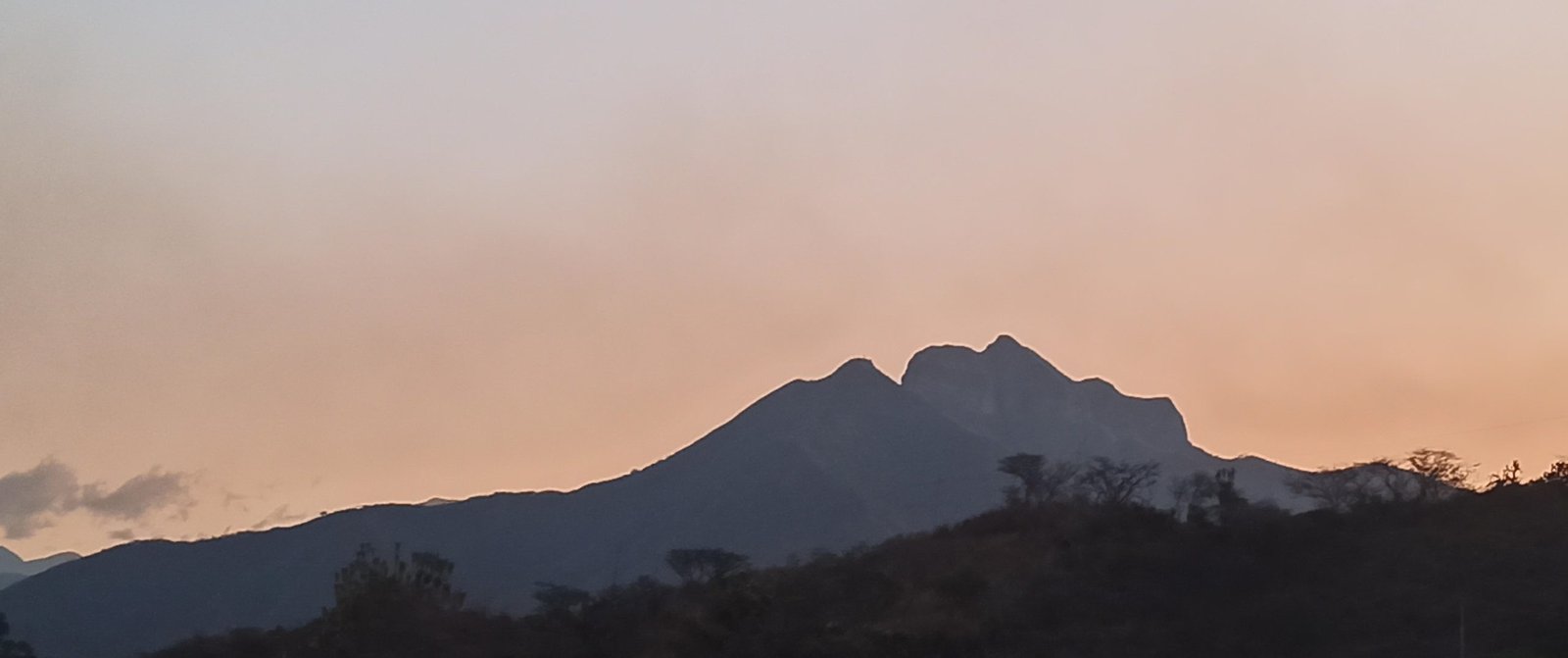
This mystical reputation is reinforced by the aerial phenomena that many report in the area. Vilcabamba is known for recurring sightings of unexplained lights that perform intelligent maneuvers above the mountain ridges. Groups of researchers and spiritual seekers come every year, drawn by the idea that Mandango's mineral wealth acts as an energy center or portal. Local faith manifests itself strongly every May 3rd, when the community ascends to visit the cross at the summit, a ritual that combines gratitude for the harvest with the spiritual protection of the land.
The elders say the hill is the guardian of ancient treasures, protected by beings who only reveal themselves to those with pure intentions. There is a tale of the battle between Mandango and Guaranga Hill, a conflict from mythical times that ended with the pacification of the valley and the definitive formation of the current landscape. These stories are not just tales; they are how the community understands its place in the world and its responsibility to the nature that surrounds them.
The route to the sacred summit
Climbing Mandango is one of the most rewarding experiences for any visitor to Vilcabamba. The trail is accessible to people with a basic level of fitness and allows for an immediate connection with the Andean environment. The traditional route takes between 3 and 4 hours for the uphill and downhill route. The trail ascends gently through forests of faique trees and native scrubland, offering panoramic views that become more spectacular as you gain altitude.
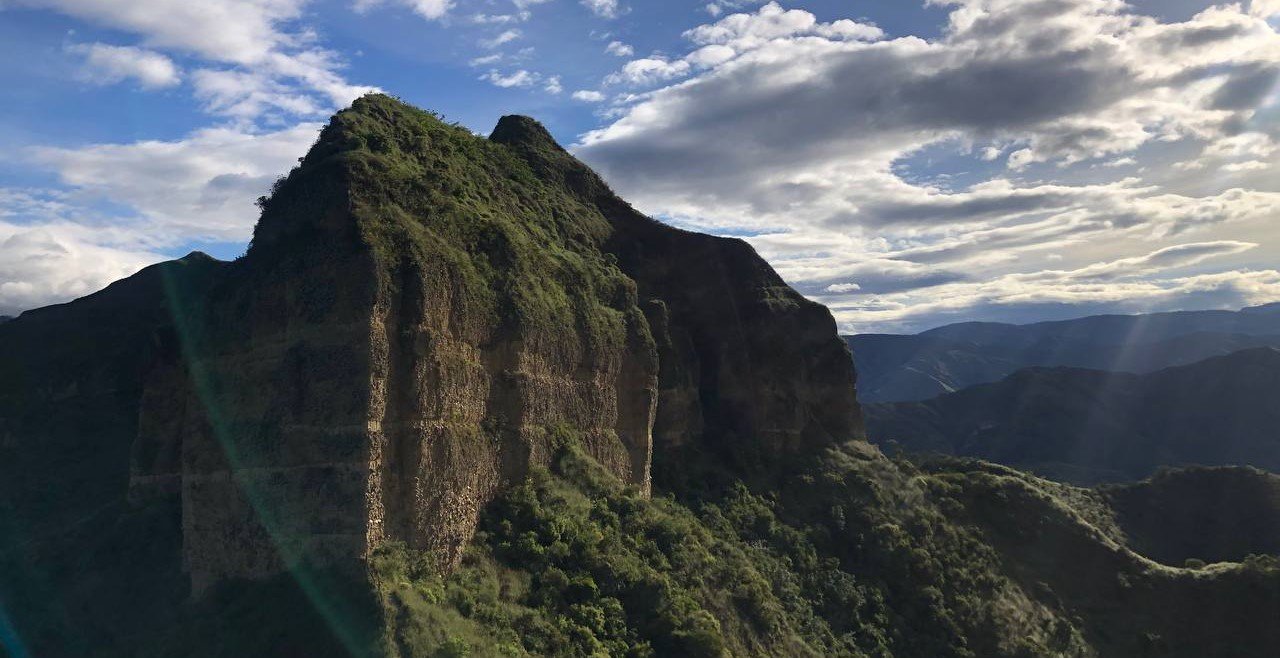
At the two-thirds point of the trail, you'll find a flat, inviting area covered in shrubs—the perfect place to hydrate before tackling the final stretch. The last part of the ascent is rockier and requires more attention, but upon reaching the summit and standing before the cross, fatigue vanishes before the vastness of the landscape. From this natural viewpoint, you can see the entire town of Vilcabamba and the mountains stretching towards the southern border. It's recommended to start the climb early in the morning, bring plenty of water, and wear shoes with good traction.
 EN_US
EN_US